Rubber Tyred Gantry (RTG) cranes are widely used in container terminals, shipyards, logistics hubs, and industrial yards because of their mobility, flexibility, and high lifting capacity. Unlike rail-mounted gantry cranes, RTGs move on large pneumatic rubber tires, allowing them to operate without fixed tracks and reposition easily across container yards. This mobility places extremely high demands on the tires, which must support massive loads while ensuring stability, durability, and safe operation.
For high-capacity RTG cranes—often lifting 30 to 65 tons or more—the rubber tires become one of the most critical structural and operational components. Selecting the correct tires and designing the proper tire configuration directly influences crane safety, load distribution, ground pressure, operational efficiency, and maintenance costs. This article explores the essential rubber tyre requirements for high-capacity rubber tyred gantry cranes and the key factors engineers must consider during crane design and operation.
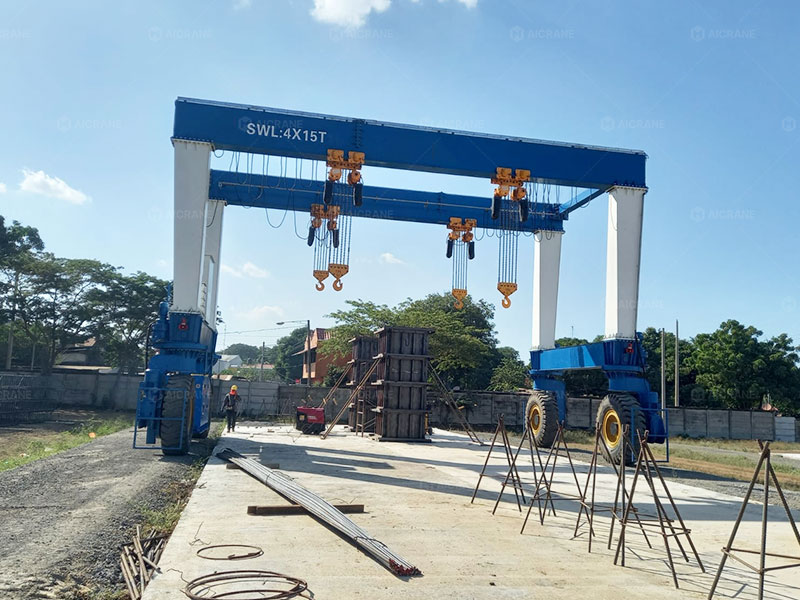
The Role of Rubber Tires in RTG Crane Systems
Rubber tires serve multiple functions in RTG crane operations. Unlike steel wheels used on rail-mounted cranes, rubber tires must simultaneously support the crane’s structural weight, lifting load, and dynamic movement. RTG cranes typically operate with multiple tire assemblies to distribute loads evenly across the ground.
Most RTGs are designed with 8, 12, or 16 tires, arranged in multiple wheel sets on each leg of the gantry structure. This multi-wheel arrangement helps distribute weight evenly and reduce ground pressure on container yards.
Typical RTG tire sizes include large industrial pneumatic tires such as:
-
14.00-24
-
16.00-25
-
18.00-25
-
21.00-25
These heavy-duty tires are specifically designed to carry extremely high loads. In many RTG models, the average wheel load can exceed 24 tons, while the maximum wheel load may reach more than 30 tons per wheel, depending on large mobile gantry crane capacity and configuration.
Because of these enormous forces, RTG tires must meet strict engineering and operational requirements.
Load Bearing Capacity Requirements
The primary requirement for RTG crane tires is the ability to safely support high loads. Each tire must withstand the combined weight of:
-
The crane structure
-
Lifting mechanisms
-
Cargo load
-
Dynamic forces during movement
High-capacity RTG cranes handling container operations may experience wheel loads of 273–320 kN (approximately 28–32 tons) per wheel.
Engineers must therefore ensure that:
-
Tire load ratings exceed the maximum wheel load.
-
Safety factors are incorporated into tire selection.
-
Tire pressure and footprint are optimized for load distribution.
If tire capacity is insufficient, excessive deformation can occur, increasing heat generation, tire wear, and risk of failure.
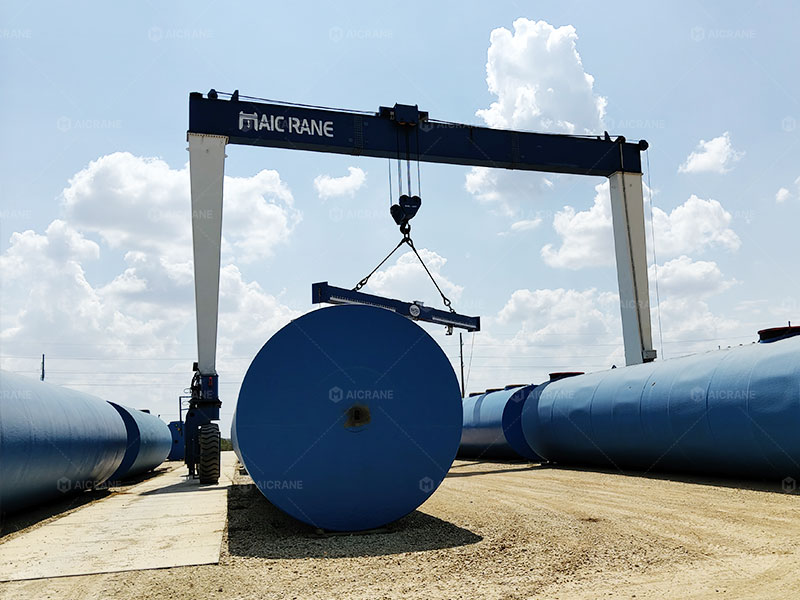
Tire Configuration and Load Distribution
Proper tire configuration is essential for distributing loads evenly across the crane structure and the yard surface.
Most RTG cranes adopt one of the following configurations:
-
8-wheel system – common for lighter RTGs
-
16-wheel system – typical for high-capacity large gantry cranes
-
Multi-wheel balancing systems
In larger cranes, wheels are often mounted on equalizing beams or bogies, which help distribute loads evenly between multiple tires. This prevents individual tires from experiencing excessive pressure and improves crane stability.
Additionally, multiple tire configurations reduce ground pressure on container yards, protecting pavement structures from damage.
Ground Pressure and Yard Surface Requirements
RTG crane tires exert enormous forces on the ground. For this reason, yard pavement design must be coordinated with crane tire specifications.
Typical RTG wheel loads can exceed 30 tons per wheel, which requires reinforced concrete surfaces capable of handling such pressure.
Key ground-related considerations include:
-
Pavement thickness
-
Reinforced concrete strength
-
Subgrade compaction
-
Tire footprint area
If the yard surface is not properly designed, problems such as pavement cracking, rutting, and uneven settlement may occur. These issues can affect crane stability and increase tire wear.
Therefore, tire footprint dimensions must be considered during the design stage of container terminals and industrial yards.
Tire Durability and Wear Resistance
RTG cranes operate in harsh industrial environments with continuous movement, heavy loads, and frequent turning. These conditions create intense stress on rubber tires.
High-quality RTG tires must provide:
-
Strong sidewall reinforcement
-
Deep tread patterns
-
High abrasion resistance
-
Resistance to cuts and punctures
Container yards often contain debris such as metal fragments, stones, or container corner castings that may damage tires. Reinforced tread compounds help extend tire life and reduce downtime.
Advanced tire materials also reduce heat buildup during long travel distances, which is critical for preventing tire degradation.
Tire Pressure Management
Maintaining proper tire pressure is essential for safe RTG crane operation. Incorrect tire pressure can lead to several problems:
Overinflated Tires
-
Reduced contact area with ground
-
Increased stress concentration
-
Higher risk of tire damage
Underinflated Tires
-
Excessive deformation
-
Heat buildup
-
Increased rolling resistance
For large RTG cranes, tire pressure monitoring systems are often installed to ensure optimal inflation levels.
Some modern RTG wheeled gantry cranes use automatic tire pressure monitoring systems (TPMS) to detect abnormal pressure levels and alert operators before serious issues occur.
Heat Resistance and Thermal Management
Heat generation is another major challenge for RTG crane tires. Several factors contribute to heat buildup, including:
-
Heavy loads
-
Continuous movement
-
Friction during turning
-
High ambient temperatures
Excessive heat can weaken rubber compounds and lead to tire failure.
To address this issue, heavy-duty RTG tires often include:
-
Heat-resistant rubber compounds
-
Reinforced internal structures
-
Ventilated tread patterns
In hot climates such as Middle Eastern container terminals, heat-resistant tire materials are especially important.
Steering and Mobility Requirements
RTG cranes rely on rubber tires to achieve flexible movement across container yards. Therefore, tire design must support various steering modes, including:
-
Straight travel
-
Pivot steering
-
Diagonal movement
-
90-degree turning
These steering modes place additional lateral forces on tires, particularly during tight turns.
High-capacity RTG cranes often use radial industrial tires with strong sidewalls to handle these lateral loads while maintaining structural integrity.
Proper tire design ensures smooth crane mobility without excessive wear or deformation.
Maintenance and Replacement Considerations
Because RTG tires operate under extreme conditions, routine inspection and maintenance are necessary.
Typical maintenance practices include:
-
Regular tire pressure checks
-
Visual inspection for cuts or cracks
-
Monitoring tread wear
-
Checking wheel alignment
-
Rotating tires to ensure even wear
Tire replacement schedules vary depending on crane usage intensity, yard conditions, and load frequency. In high-traffic container terminals, RTG tires may require replacement every few years.
Predictive maintenance strategies using sensors and monitoring systems are becoming more common in modern automated RTG fleets.
Technological Innovations in RTG Tire Systems
As container terminals move toward automation and electrification, tire technology is also evolving.
Modern RTG cranes may incorporate:
-
Smart tire monitoring systems
-
Advanced radial tire structures
-
Low rolling resistance compounds
-
Improved puncture resistance
In automated container terminals, tire condition monitoring is integrated into crane diagnostic systems to ensure safe autonomous operation.
These innovations help improve operational efficiency while reducing maintenance costs and unexpected downtime.
Conclusion
Rubber tires are a fundamental component of high-capacity rubber tyred gantry cranes, directly influencing safety, performance, and operational efficiency. Because RTG cranes rely on tires to support massive loads and provide mobility, the tire system must meet strict requirements related to load capacity, durability, heat resistance, and ground pressure management.
Proper tire selection involves careful consideration of wheel load ratings, tire configuration, yard pavement design, and maintenance strategies. High-capacity RTG cranes typically use multiple heavy-duty pneumatic tires arranged in multi-wheel systems to distribute loads and maintain stability.
As container terminals continue to demand higher productivity and automation, advances in tire technology – including smart monitoring systems and improved rubber compounds – will further enhance RTG crane reliability and efficiency.
Ultimately, well-designed rubber tire systems ensure that high-capacity RTG cranes can perform heavy lifting operations safely while maintaining long service life and optimal mobility in demanding industrial environments.